Hisae Ikenaga
Hisae Ikenaga. Andamiajes domésticos
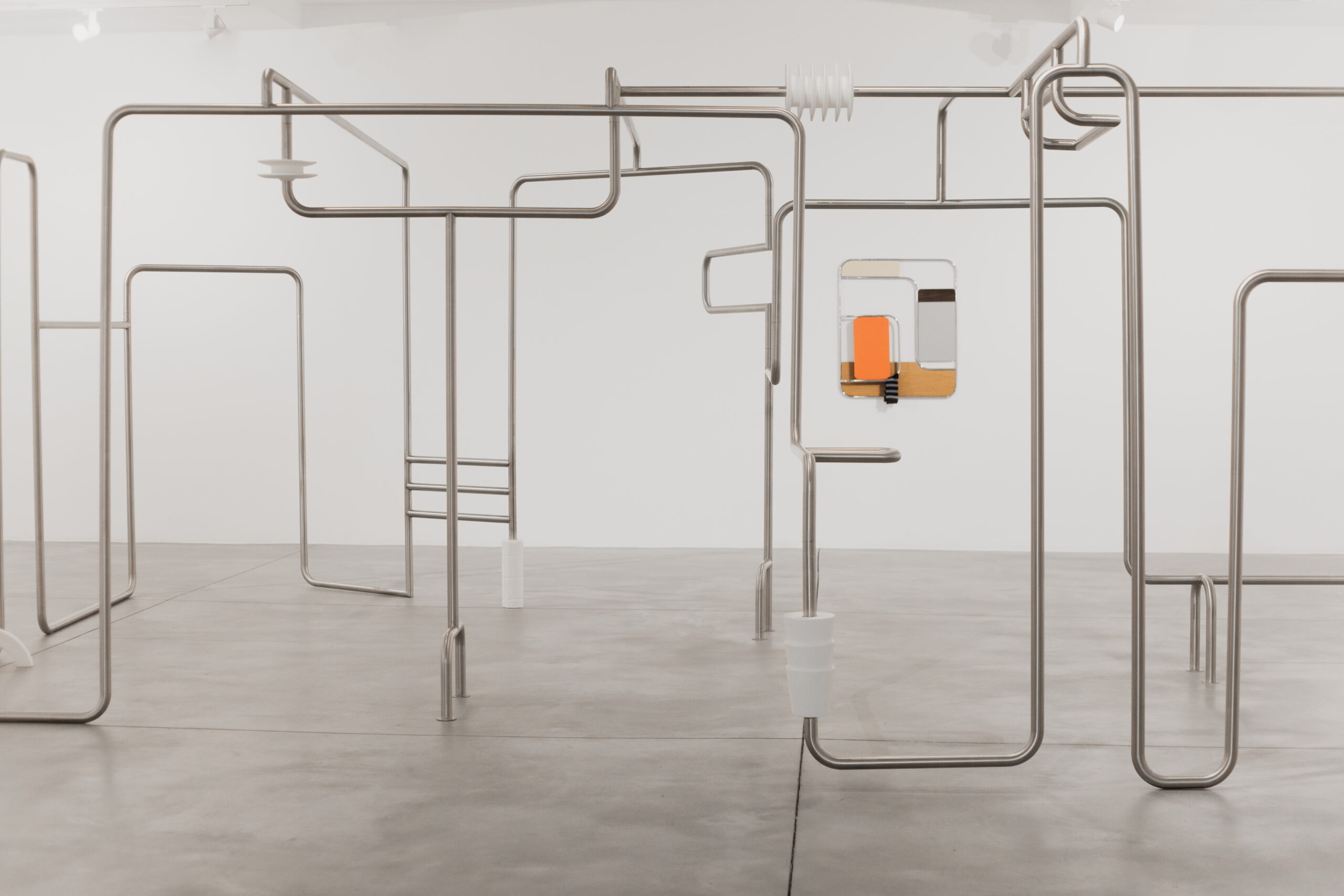
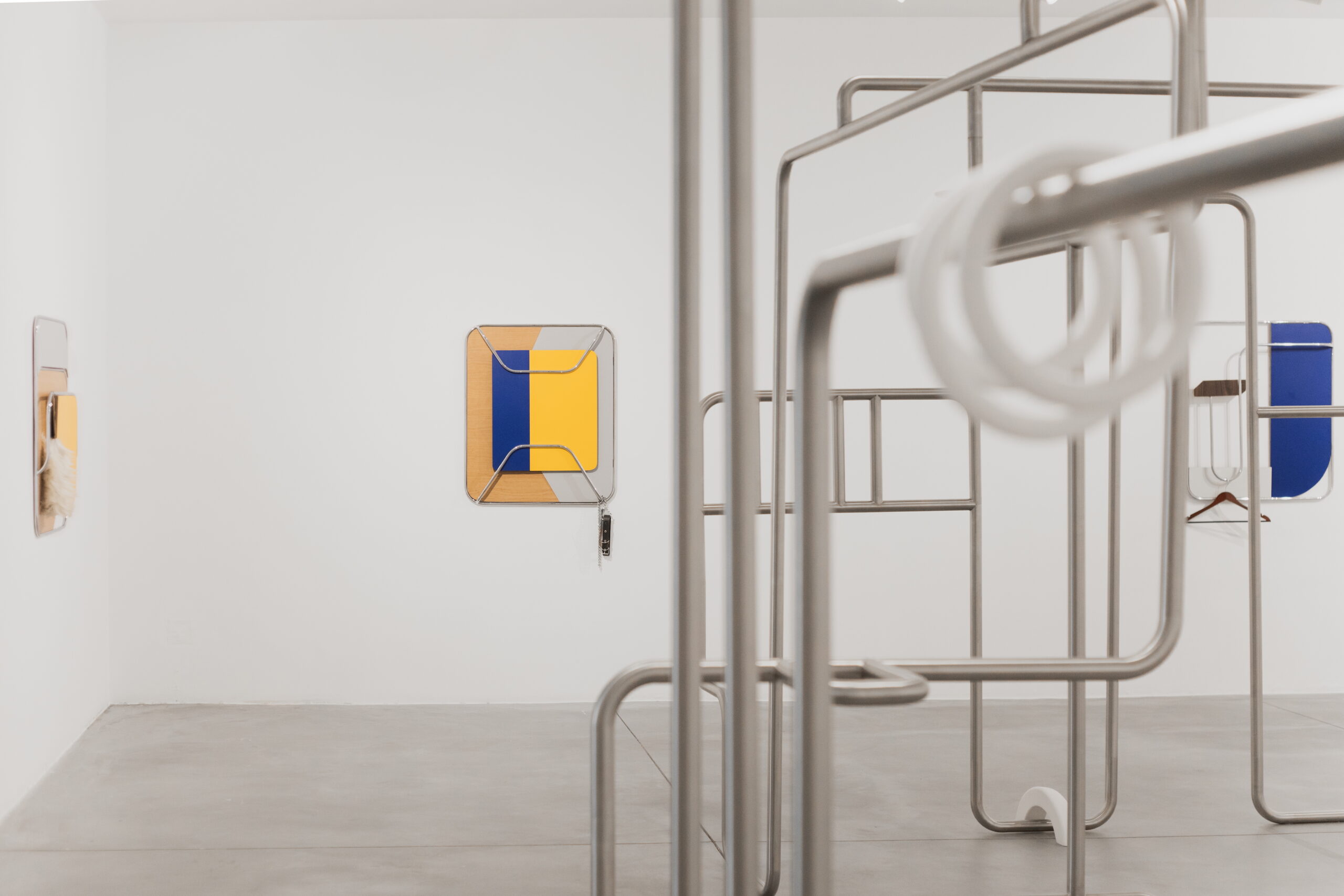
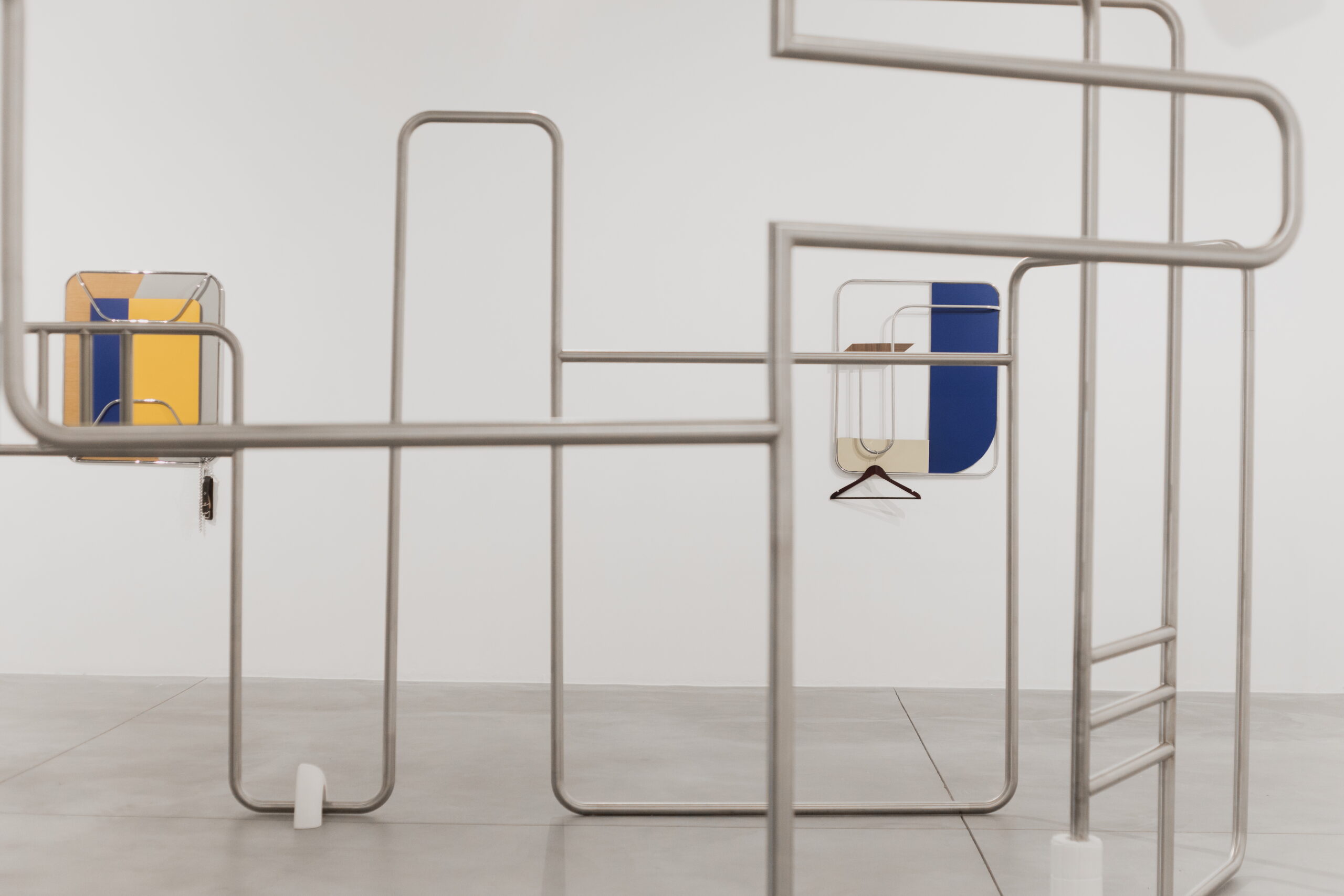
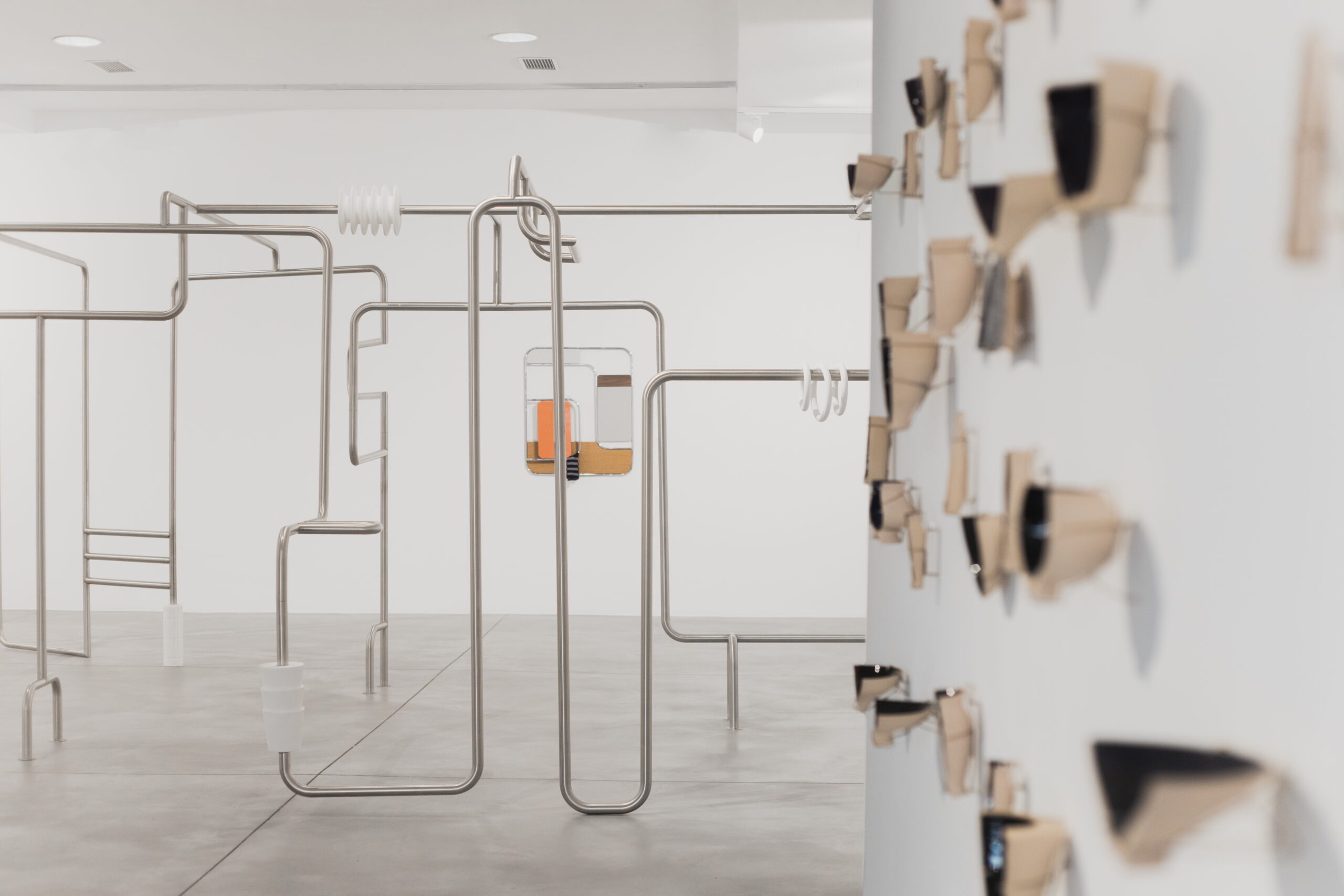
Until 29 January, you can visit Hisae Ikenaga’s exhibition Andamiajes domésticos (Domestic Scaffoldings) at DIDAC. Trained between Mexico, Japan and Spain, the artist invites us to take a fresh look at the objects and structures around us. A large modular, mobile structure evokes the hidden pipework inside our homes and the tubular street furniture of our cities: railings, handrails and bike racks that both control and support urban life. It is accompanied by wall pieces that work as “flattened” furniture, echoing Marcel Breuer’s Wassily chair, onto which small everyday objects (a hanger, a wallet, a feather duster) add a touch of irony. Ceramics complete the exhibition as a material tied to the home and to the archaeology of everyday life, reclaiming the often-overlooked domestic work, so much of it carried out by women, that has sustained communities throughout history. A critical reflection on the contemporary habitat and on how the structures we build shape the way we live.
Hisae Ikenaga spends time reflecting on objects and techniques, searching for their soul. She likes to investigate how things work and the way they are produced. She is also interested in archaeology insofar as it reveals the everyday life of the past, and she enjoys playing with the idea that her work might, in a way, prompt a similar attention to the objects that surround us.
Trained between Mexico, Japan and Spain, her work has carried, since the beginning of her career, a certain echo of hybridity. An internal struggle between conformity to the industrial system so widely established in Europe, the half-finished industrialisation experienced in Mexico, and the echo of the entire Japanese tradition; between the newest technology and respect for craftsmanship. Like a life path between past, present and future, a passage in which she hurries to rescue samples of our way of living.
Hisae’s work with objects is very clearly concerned with the ownership of function. “There is a big difference between great design and what reaches the popular. What reaches the popular is something completely distorted,” says Hisae Ikenaga. In Andamiajes domésticos (Domestic Scaffoldings), a large modular, adaptable and mobile structure introduces us to the universe of those designs hidden inside our homes and buildings: structures that add up to a tangle of ducts we usually don’t see, yet which make up the inner workings of our homes. It also leads us to think of the tubular structures of our street furniture, with walkways, handrails, and grips for bins and bicycles. All these elements have a dual function of demarcation and control, but they also serve as aids and act as facilitators for our whole life in the city. Their seemingly simple nature conceals a paradox that speaks of the constant contradictions in the ways we organise society.
Alongside this large intervention, Andamiajes domésticos brings together wall works that function as contracted pieces of furniture. They are objects that have been stripped of their three-dimensionality and turned into pieces of an almost pictorial character: flat, suspended. The chrome tubes and the colours of the boards act as the basic elements of their form and take us to the world of tubular furniture such as the Wassily chair, the first tubular chair, designed in the 1920s by Marcel Breuer while he was teaching at the Bauhaus. Resting on them is a series of small forgotten objects. A coat hanger, a wallet, a rake or a feather duster humanise the space of the works, robbing them of a possible minimalist character and bringing them closer to the irony of the encounter. As the artist says, “I like the pieces to clash with certain details.”
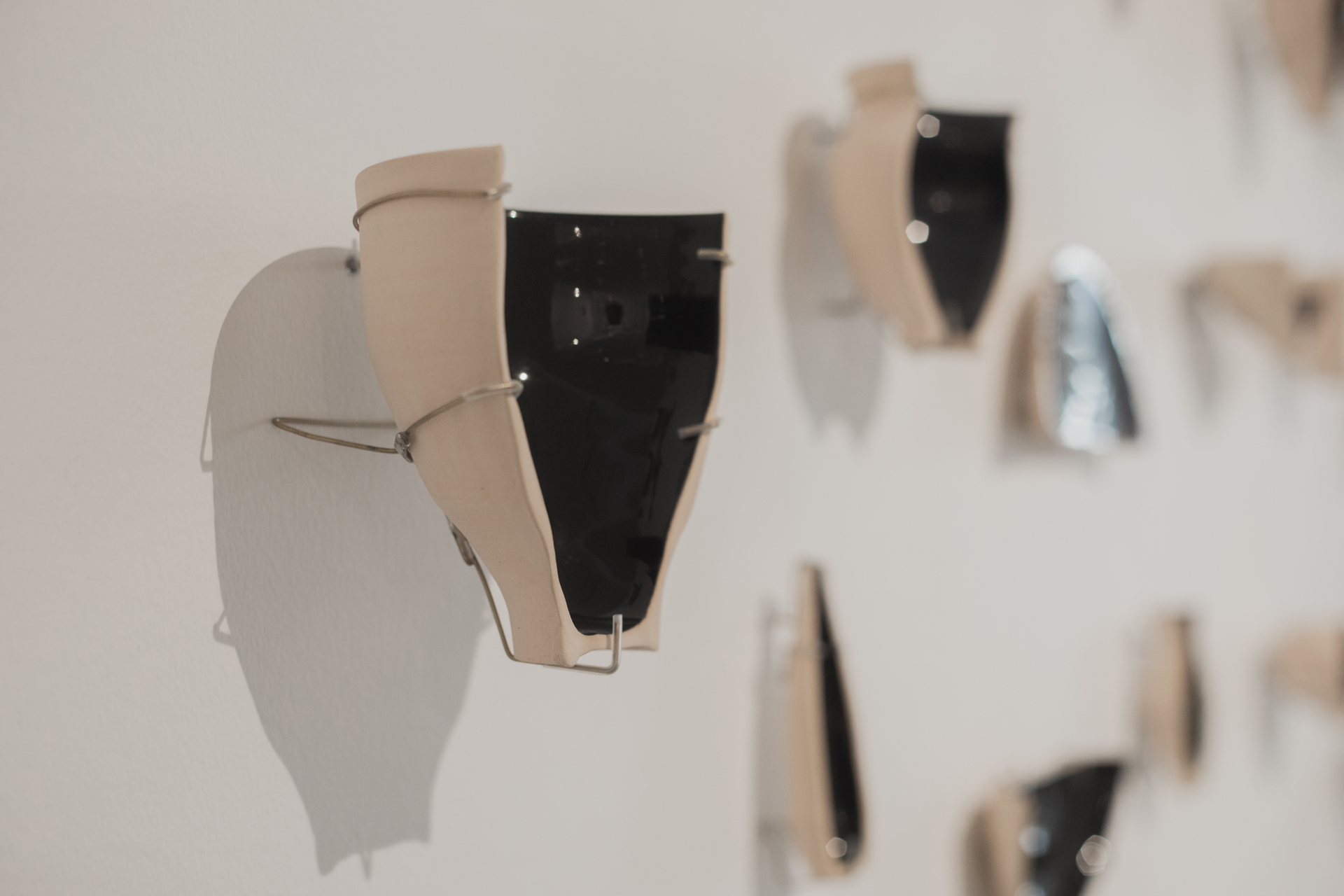
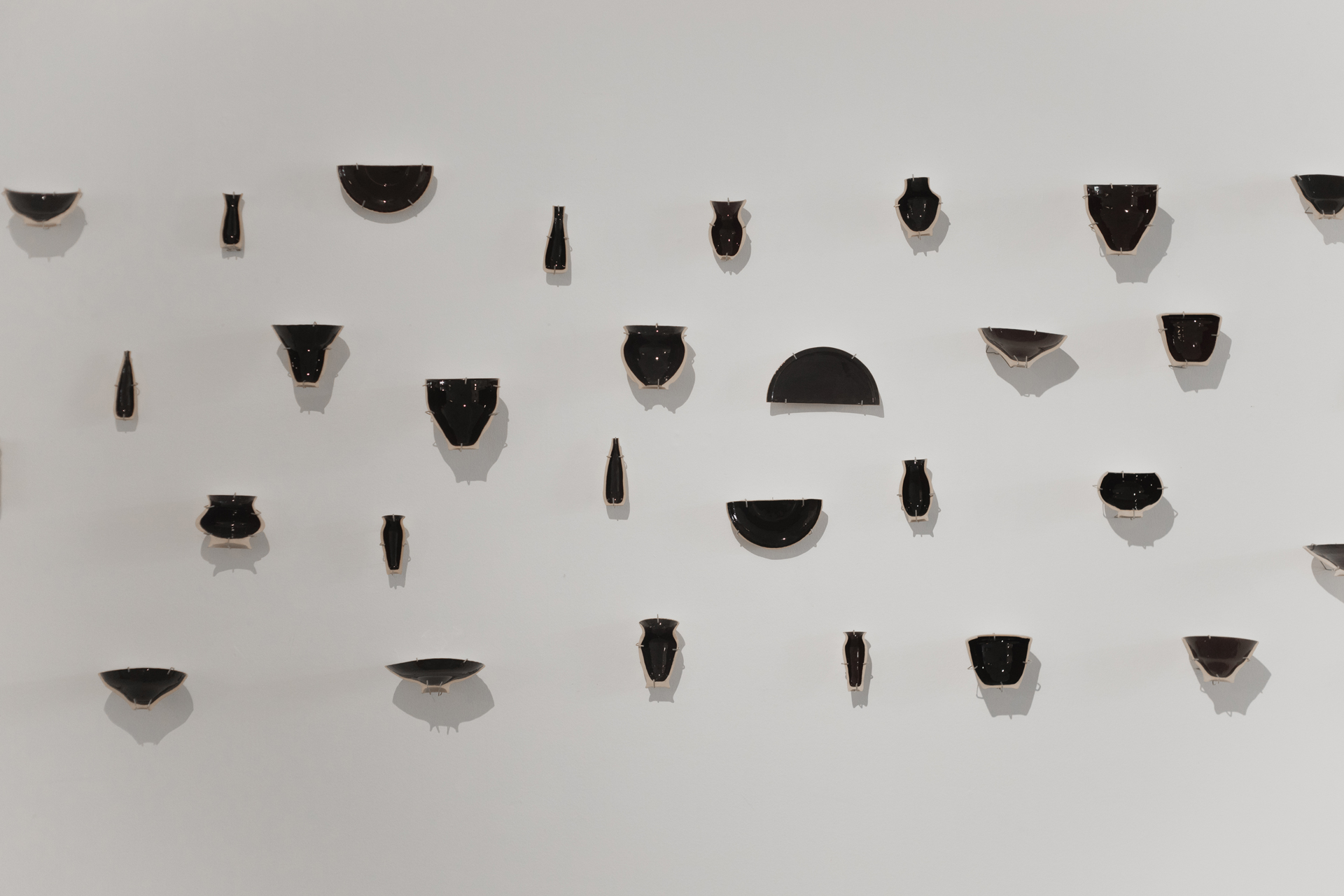
Ceramics is another key material in Hisae Ikenaga’s artistic processes present in Andamiajes domésticos. This material has traditionally been associated with objects found in the home, with household items we link to the acts of our daily lives, and also with certain pieces of furniture and decorative objects.
For the artist, ceramics has to do with dwelling and is part of the home, filling our architectures and serving us in our day-to-day lives. It also bears a clear relationship to certain archaeological materials that tell a story about the everyday, that reveal untold histories, many of them related to the women’s work that has sustained societies throughout history and that has been minimised and concealed, stripped of the importance it has truly had as the support of the most intimate fabric of our lives in community.
Ultimately, Hisae Ikenaga’s work is full of images through which she invites us to rethink the contemporary habitat critically, bearing in mind how the structures we create have an impact on the landscape and the habitat, but also on our ways of life and even on how we organise ourselves as a society.
Mónica Maneiro Jurjo
With the support of Deputación da Coruña and Kultur | lx – Arts Council Luxembourg
Production support: Konschthal Esch and Fondation Schleich-Lentz